Introduction to the Powder Metallurgy Extended Universe
In the final installment of our Introduction to Powder Metallurgy series, we will spotlight several emerging trends in the powder metallurgy industry. These products and processes may not be the first things that come to mind when you think powder metallurgy, but they all have unique characteristics that continue to push the industry forward.
Our series so far has offered an Introduction to Powder Metallurgy, Introduction to Metal Injection Molding, Introduction to Sintered Oil-Impregnated Bearings and an Overview of Soft Magnetic Composites. Let’s now build upon that base knowledge and explore the extended universe of powder metallurgy.
Gearboxes
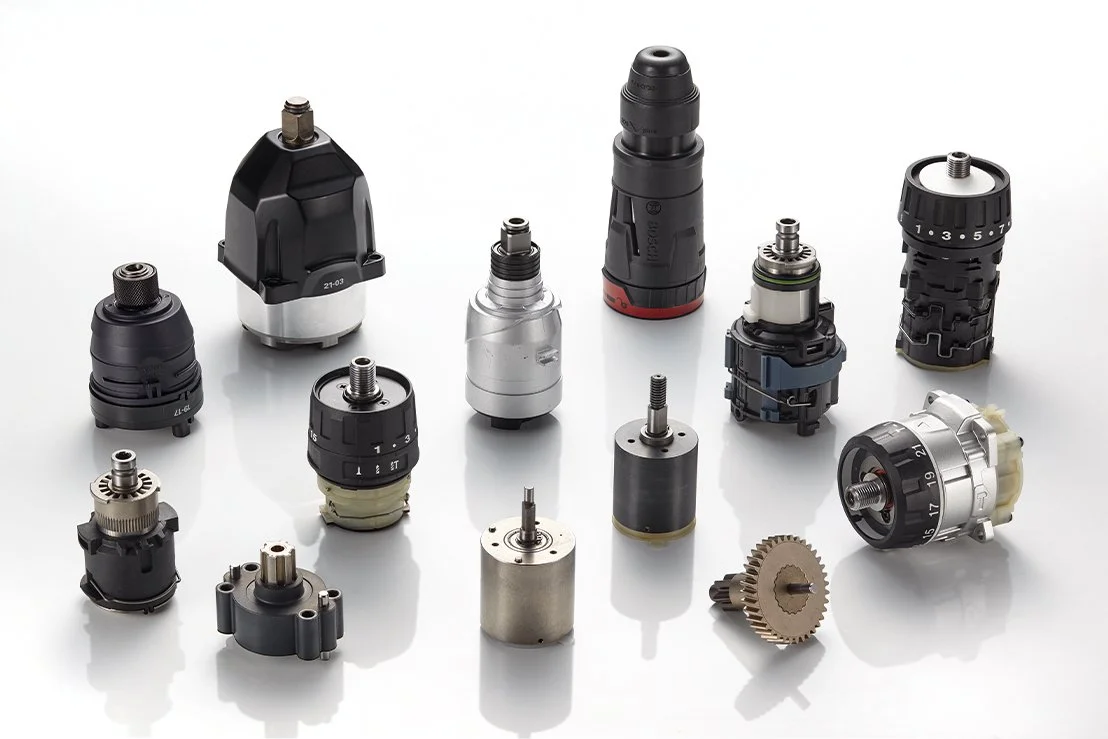
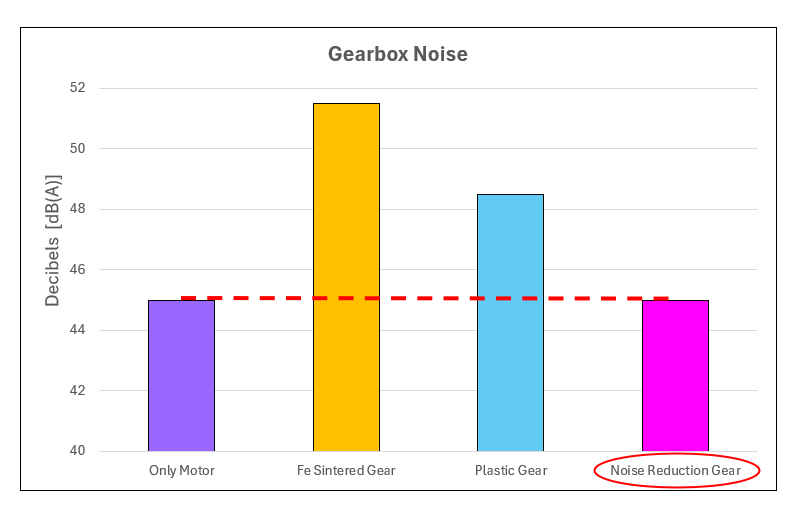
While the rest of this article will focus on somewhat new technologies within the powder metallurgy world, gearboxes, of course, are not new at all. So, what are they doing here? By manufacturing gearboxes almost exclusively with powder metallurgy and metal injection molding components, Porite has developed an extremely precise gearbox with the added bonus of being quieter than competing gearboxes.
Many of the benefits of powder metallurgy and metal injection molding that we discussed in the previous installments are precisely what makes this gearbox special. The unique material combinations made possible by powder metallurgy are a perfect example. The noiselessness of the gearbox is achieved in part by utilizing a special iron powder that is coated with copper, creating a product that is smoother and quieter.
To achieve the tight tolerances required of the smaller components, Porite turned to metal injection molding. The ability to make miniature, yet precise, components made this the perfect process to produce the more detailed aspects of our gearboxes.
Porite’s gearboxes can be used in conjunction with an electric motor in any number of applications including, but not limited to, power tools, motorized conveyors and mixing / blending machines.
By utilizing both powder metallurgy and metal injection molding, Porite has been able to produce some of the best gearboxes available. Learn more about our manufacturing process here.
Interconnect Plates
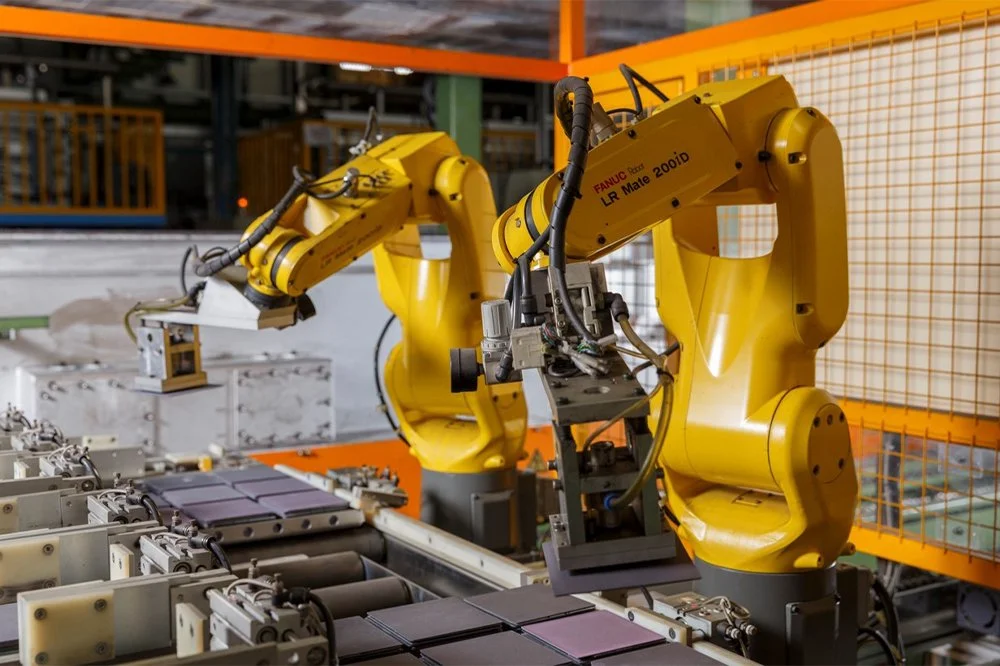
An important component in Solid Oxide Fuel Cells (SOFC) and Solid Oxide Electrolysis Cells (SOEC), interconnect plates are part of the fuel cell “stack” which are considered the heart of the fuel cell.
The key features of interconnect plates are their unique material makeup and the necessity of porosity. As we know, these are both great features of powder metallurgy components.
Because powder metallurgy components begin as powder, we can utilize different metals and even blend different metal powders for the perfect mixture of materials. While the exact material specifications depend on the OEM of the fuel cell, one thing is certain, utilizing the unique material advantages of powder metallurgy is an advantage.
The fuel cell stack produces electricity, but it also produces a byproduct which is eventually expelled from the fuel cell in the form of water. Thus, certain ions must be enabled to pass through the stack, and the porosity of these interconnect plates becomes a key feature. Again, we know powder metallurgy components are inherently porous and this works to their advantage in this application.
Learn more about our interconnect plate manufacturing process here.
Metal Foam
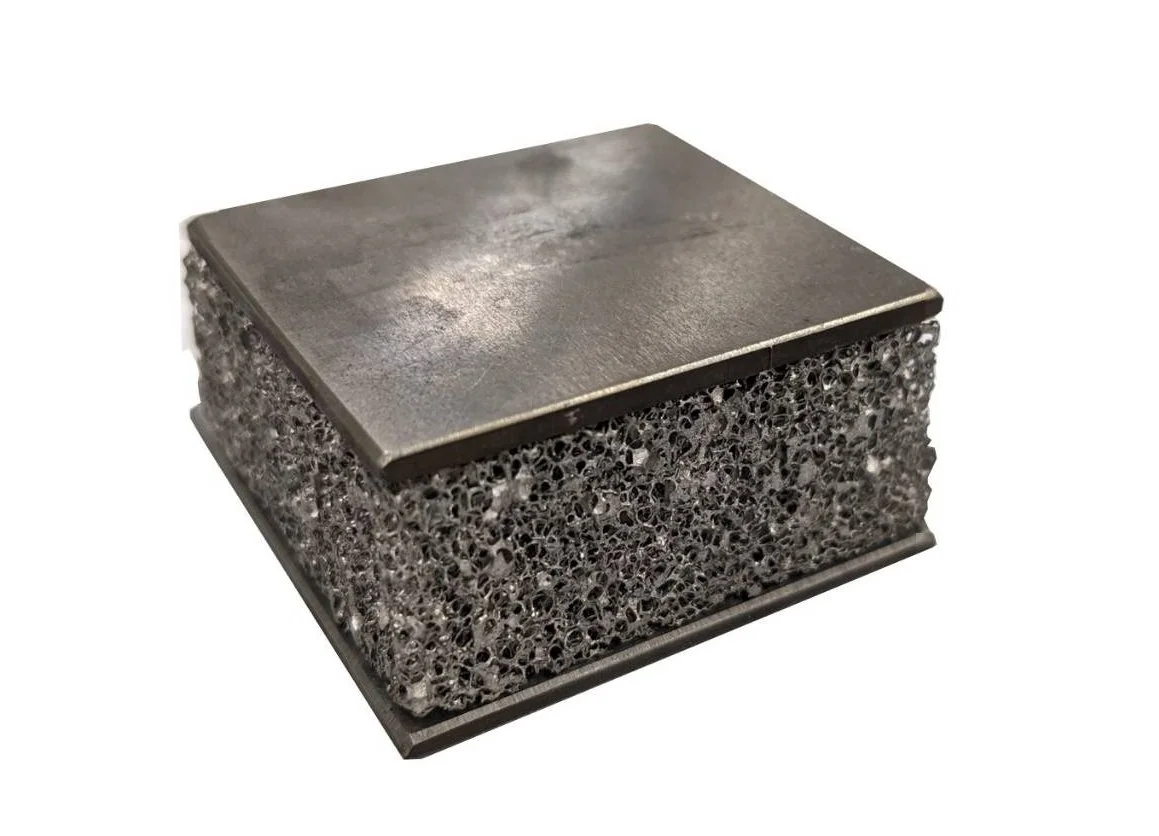
A unique product within the powder metallurgy industry, metal foam combines some of the principles of both traditional powder metallurgy and metal injection molding to form something entirely different from either process.
To create metal foam, Porite mixes metal powder with a pore forming agent (space holder). This blend is then mixed with a binding agent (like in metal injection molding) to help shape and solidify the mixture. During sintering, the pore forming agent and the binding agent are removed, leaving just the sintered metal with pores.
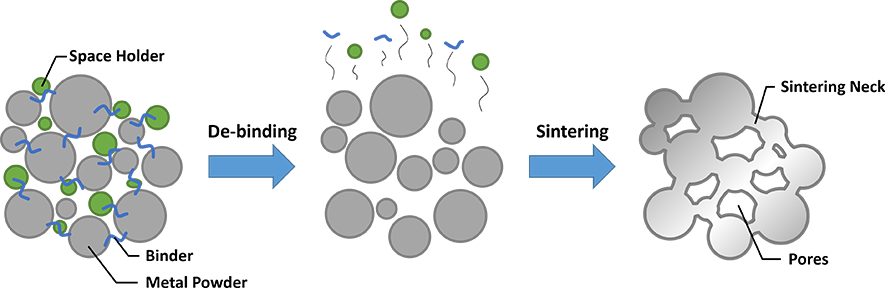
The resulting product is lightweight but strong. It is used in aerospace and automotive applications in crash absorption zones – bumpers, crumple zones, etc. It is also used in various sound absorption capacities, in medical implants to provide structure and as a filter in industrial applications.
Learn more about Porite’s metal foam manufacturing process here.
High Density Powder Metallurgy
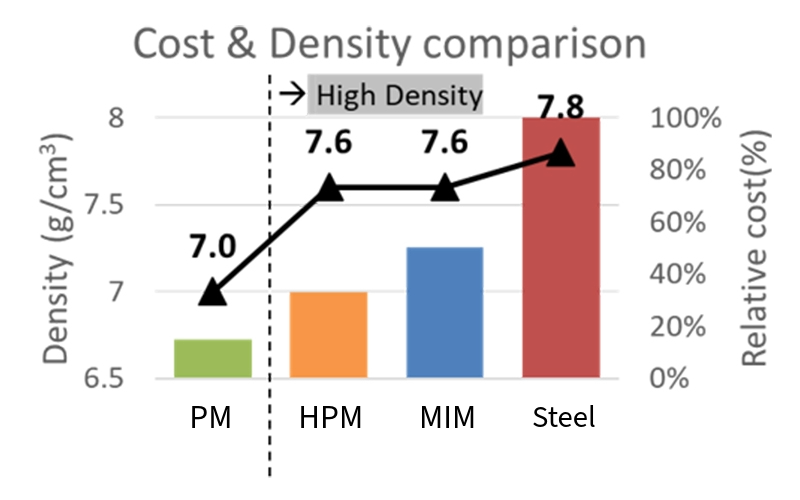
In recent years, powder metallurgy manufacturers have sought ways to compete with other metal fabricating technologies such as forging, casting and machining. The main advantage that these processes have over powder metallurgy is density and strength. Thus, what has become known as High Density and High Precision Powder Metallurgy (sometimes shortened to HPM) was born.
To achieve the higher density requirements of certain metal components, powder metallurgy have turned to solutions in three different phases of the manufacturing process: compaction, sintering and post-sintering. Each manufacturing process is different and will generally only include one or two of the densification methods.
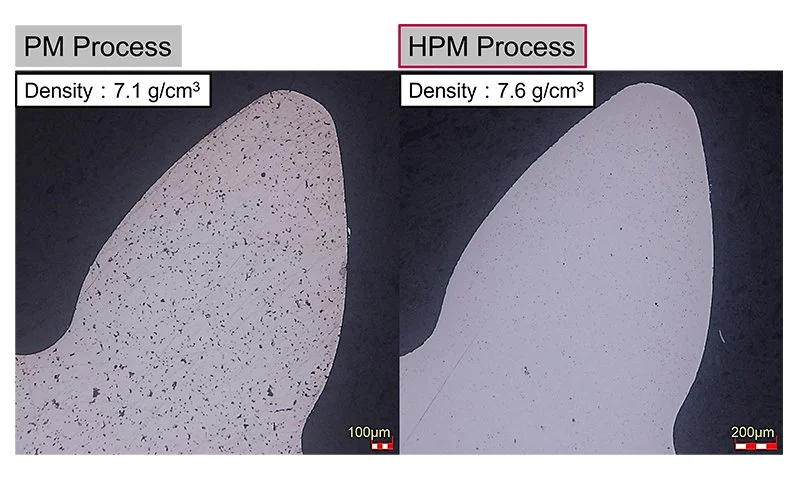
Increasing density at compaction can be achieved with higher pressures at normal compaction temperatures, warm compaction, warm die compaction, high velocity compaction or die wall lubrication. Density can be increased during sintering through solid phase sintering, liquid phase sintering or ferrite phase sintering. Post-sintering densification is typically achieved through cold forming.
By utilizing these processes, the density and strength of the powder metallurgy component is increased, but the cost remains relatively low when compared to competing metal fabricating processes.
Learn more about how Porite is achieving high density and high precision powder metallurgy here.
3D Printing
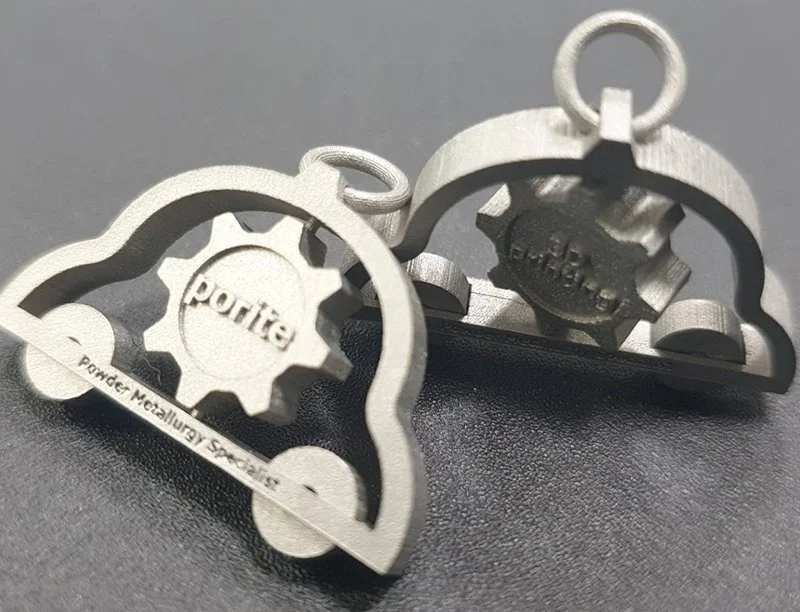
One of the most talked about innovations in recent years has been 3D printing. The ability to create complex components in a variety of materials is certainly an intriguing possibility and the powder metallurgy industry has embraced this technology as well.
In the powder metallurgy industry, 3D printing encompasses several technologies, but focuses on three areas: (1) Selective Laser Melting, (2) Metal Binder Jetting and (3) Material Extrusion.
By utilizing 3D printing, we can create a turnaround time that would be unattainable with other manufacturing methods. Using this method, Porite can offer complex prototyping to our customers in record turnaround time.
Although there are currently some drawbacks to manufacturing high volumes with 3D printing (cost, lead time), it is a developing space that we are closely monitoring for further developments.
Learn more about our 3D printing offerings here.
Conclusion
Powder metallurgy’s roots can be traced back to the ancient Egyptians, but that doesn’t mean that the technology is dated. On the contrary, powder metallurgy manufacturers are continuing to innovate and evolve. Today, the powder metallurgy universe encompasses a variety of techniques that allows for the production of high-tech components in a wide array of industries. From aerospace and automotive to medical science applications, there is a powder metallurgy technique that fits in any industry.
To discuss your powder metallurgy project, contact Porite today.